
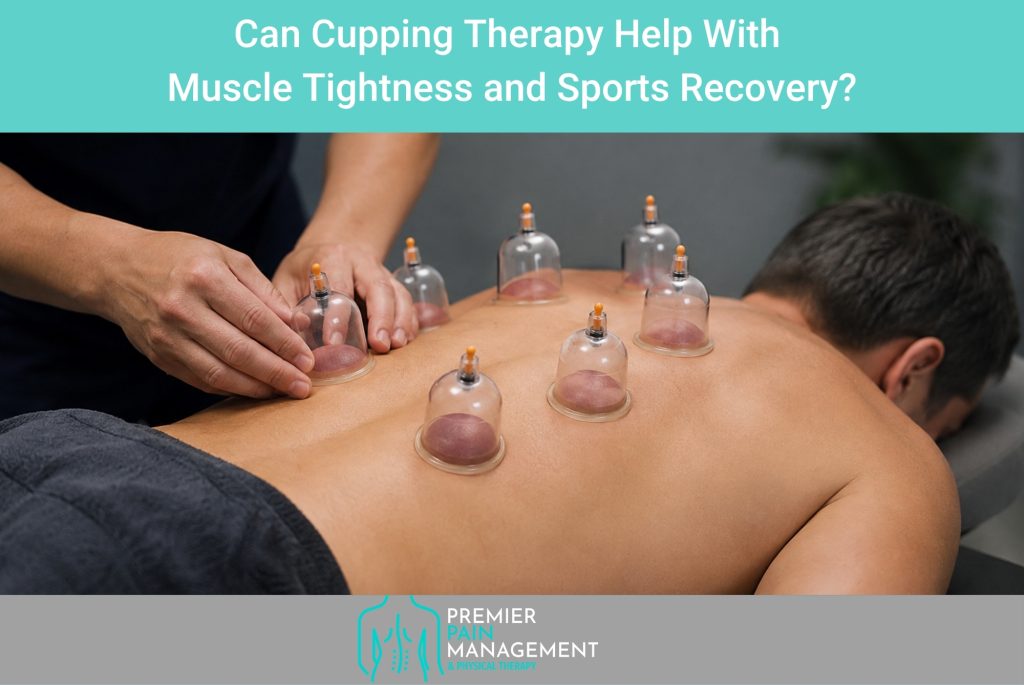
Muscle tightness, soreness, and fatigue are common concerns for athletes, active adults, and anyone who regularly challenges their body through exercise or physically demanding activities. While rest and appropriate rehabilitation remain important parts of recovery, complementary treatments such as cupping therapy may also be incorporated into a broader treatment plan to address muscle tension and support recovery.
Cupping therapy uses specialized cups placed on the skin to create negative pressure, or suction. Rather than compressing tissues as traditional massage techniques often do, cupping gently lifts the skin and superficial soft tissues. This mechanical effect may temporarily influence local circulation, tissue mobility, and pain perception.
At Premier Pain Management in Highlands Ranch, Colorado, cupping therapy may be considered as part of an individualized approach to musculoskeletal pain, muscle tightness, mobility limitations, and sports recovery. Understanding what cupping can—and cannot—do can help patients make informed decisions about whether it belongs in their recovery program.
What Is Cupping Therapy?
Cupping is a therapeutic technique with a long history in several traditional healing systems. Modern rehabilitation and musculoskeletal practices may use cupping as a complementary soft-tissue intervention.
During treatment, cups are positioned over selected areas of the body. Suction creates negative pressure that pulls the skin and superficial tissues upward into the cup. Depending on the treatment approach, cups may remain stationary or may be moved across the skin.
Dry Cupping
Dry cupping involves creating suction without intentionally breaking the skin. This is the form commonly associated with sports recovery, rehabilitation, and treatment of muscular tightness.
Static Cupping
With static cupping, cups remain in specific locations for a limited period. They may be positioned over areas where a patient experiences tightness, discomfort, or restricted mobility.
Moving or Gliding Cupping
A clinician may also apply lubricant to the skin and move suction cups across an area. This technique combines negative pressure with movement across the soft tissues.
The appropriate method depends on the patient’s symptoms, health history, treatment goals, and clinical assessment.
How Does Cupping Therapy Affect Muscles and Soft Tissue?
The distinctive feature of cupping is its use of negative pressure. Massage, foam rolling, and many manual therapies primarily compress tissue. Cupping instead lifts superficial tissues away from deeper structures.
Researchers continue to investigate exactly how this affects pain and recovery. Proposed mechanisms include changes in local blood flow, stimulation of sensory receptors, alterations in pain processing, and mechanical effects on superficial soft tissues.
Increased Local Circulation
The suction created by a cup can increase blood flow near the treated area. This response is also responsible for some of the characteristic circular discoloration that may appear after treatment.
Increased local circulation should not be interpreted as proof that cupping directly “flushes toxins” from muscles. Claims about detoxification are not well supported by modern medical evidence.
Changes in Pain Perception
Cupping stimulates sensory receptors in the skin and underlying tissues. This sensory input may influence how the nervous system processes discomfort, potentially contributing to short-term pain relief in some individuals.
Temporary Reduction in Feelings of Tightness
Some patients report that muscles feel looser after cupping. When discomfort decreases and movement feels easier, an athlete may experience an improvement in perceived flexibility or mobility.
Effects on Tissue Mobility
Negative pressure may influence the movement of superficial tissues and fascial layers. However, claims that cupping permanently “breaks up” scar tissue or physically releases adhesions should be approached cautiously. Tissue biology is more complex than these descriptions suggest.
Can Cupping Help With Muscle Tightness?
Cupping may help some patients manage the sensation of muscle tightness, particularly when it is associated with training, repetitive activity, prolonged positioning, or musculoskeletal discomfort.
Common areas treated may include the:
Shoulders and upper back, lower back, quadriceps, hamstrings, calves, gluteal muscles, hip region, and other areas affected by repetitive physical activity.
Muscle tightness can have many causes, however. Overuse, weakness, altered biomechanics, limited joint mobility, inadequate recovery, injury, nerve irritation, and protective muscle guarding can all contribute.
For that reason, simply treating the area that feels tight may not address the underlying problem.
What Does Research Say About Cupping Therapy?
Scientific interest in cupping has increased considerably, but the evidence remains mixed and varies according to the condition being treated.
Some systematic reviews and clinical studies suggest cupping may provide short-term improvements in certain types of musculoskeletal pain. Research has examined its potential use for conditions involving the neck, shoulders, lower back, and other musculoskeletal regions.
However, studies frequently differ in cupping technique, treatment frequency, comparison groups, and outcome measurements. Some also have small sample sizes or methodological limitations.
For sports recovery specifically, there is not yet strong evidence that cupping dramatically accelerates muscle healing or improves athletic performance.
A balanced interpretation is therefore appropriate: cupping may be useful as an adjunct for symptom management and perceived recovery, but it should not replace evidence-based rehabilitation, appropriate training, sleep, nutrition, hydration, or medical evaluation when an injury is suspected.
Cupping Therapy for Sports Recovery
Athletic recovery involves more than reducing soreness. The body must adapt to training stress, repair tissues, restore energy reserves, and prepare for subsequent activity.
Cupping may be incorporated into a recovery program when muscle tightness or discomfort is interfering with comfortable movement.
Managing Post-Exercise Muscle Soreness
Delayed-onset muscle soreness, commonly called DOMS, often develops after unfamiliar or intense exercise. Symptoms typically become noticeable several hours after exercise and may peak during the following days.
Some athletes use cupping because they feel less sore or stiff afterward. Individual responses vary, and cupping should not be viewed as a guaranteed method for eliminating DOMS.
Supporting Comfortable Movement
When muscles feel sore or tight, normal movement can become uncomfortable. If cupping temporarily reduces discomfort, patients may find stretching, mobility work, or therapeutic exercise easier to perform.
Complementing Physical Therapy
Cupping can potentially be combined with therapeutic exercise, stretching, mobility training, strengthening, and other physical therapy techniques.
This combination is important because passive treatments generally do not correct underlying weakness, poor movement patterns, or inadequate conditioning on their own.
Supporting Training Recovery
Athletes may use cupping during periods of heavy training to manage muscular discomfort. The objective should be to complement an appropriate recovery strategy rather than mask pain that signals an injury.
Which Athletes May Consider Cupping?
Cupping is not limited to elite athletes. Recreational athletes and physically active individuals may also consider treatment.
It may be used by people participating in running, cycling, weightlifting, CrossFit-style training, swimming, tennis, golf, basketball, football, soccer, skiing, hiking, and other activities.
Treatment decisions should be based on symptoms and clinical needs rather than the particular sport alone.
Cupping Therapy vs. Massage Therapy
Cupping and massage can both be used to address muscle discomfort, but their mechanical effects differ.
Massage Uses Compression
Massage generally involves pressure applied directly into muscles and soft tissues. Techniques may include kneading, compression, friction, and stretching.
Cupping Uses Negative Pressure
Cupping pulls superficial tissues upward through suction. Some patients prefer this sensation when direct pressure over a sore area feels uncomfortable.
Can They Be Used Together?
Yes. Depending on the patient’s condition, cupping may be combined with massage, therapeutic exercise, stretching, or other rehabilitation techniques.
Neither treatment should automatically be considered superior. The best approach depends on the individual’s symptoms and treatment goals.
Cupping vs. Foam Rolling for Muscle Recovery
Foam rolling is a convenient self-directed recovery strategy that applies compression to muscles. Cupping provides a different mechanical stimulus through suction.
Foam rolling has the advantage of being inexpensive and easy to perform at home. Cupping typically requires professional application when being used therapeutically.
Some athletes use both as part of a broader mobility and recovery routine.
What Happens During a Cupping Therapy Session?
A treatment session typically begins with an evaluation of the patient’s symptoms and goals. The clinician may assess the location of discomfort, range of motion, muscle tension, activity level, and relevant medical history.
Cup Placement
Cups are placed over selected areas, and suction is gradually created. Patients generally experience a pulling or tightening sensation.
Cupping should not necessarily be painful. Patients should communicate if suction feels excessively intense.
Treatment Duration
The length of treatment varies depending on the technique and treatment area. Cups generally remain in place for a limited amount of time rather than for prolonged periods.
After Treatment
The skin may temporarily appear red, purple, or darker where cups were placed. These circular marks are common and result from changes in superficial blood flow and small blood vessels.
They are not necessarily bruises caused by an injury, although some tenderness can occur.
How Long Do Cupping Marks Last?
Cupping marks may last anywhere from several days to approximately one or two weeks, depending on suction intensity, treatment duration, skin characteristics, and individual response.
The color of a cupping mark should not be used to diagnose disease or determine how many “toxins” were supposedly removed from the body.
Is Cupping Therapy Painful?
Most people describe cupping as a pulling, pressure, or stretching sensation rather than sharp pain.
Mild soreness may occur afterward. Excessive pain, blistering, burns, or significant skin injury are not expected outcomes of properly performed routine dry cupping and should be evaluated if they occur.
Are There Side Effects of Cupping?
Cupping is generally considered a low-risk intervention when appropriately performed, but side effects are possible.
Potential effects include temporary skin discoloration, tenderness, mild soreness, skin irritation, and temporary sensitivity.
Rare complications may include burns, infection, blistering, or more significant skin injury, particularly when inappropriate techniques are used.
Who Should Be Cautious About Cupping?
Cupping may not be appropriate over open wounds, active skin infections, significant skin irritation, or recently injured tissue.
Patients with bleeding disorders, circulation problems, certain medical conditions, or those taking medications that increase bleeding or bruising risk should discuss cupping with a qualified healthcare professional before treatment.
Pregnant patients and individuals with significant medical conditions should also discuss whether treatment is appropriate for them.
Can Cupping Heal a Sports Injury?
Cupping should not be considered a stand-alone treatment for a significant sports injury.
A muscle strain, tendon injury, ligament injury, fracture, joint injury, or nerve problem requires an accurate diagnosis and appropriate management. Cupping may sometimes help manage associated muscular discomfort, but reducing pain does not necessarily mean injured tissue has completely healed.
This distinction is especially important for athletes eager to return to competition.
Why Treating the Cause of Muscle Tightness Matters
Persistent muscle tightness can sometimes be a symptom rather than the primary problem.
For example, recurrent hamstring tightness might be associated with inadequate strength, altered running mechanics, limited hip mobility, neural tension, training overload, or a previous injury.
Similarly, persistent shoulder tightness could relate to repetitive overhead activity, posture, weakness, joint dysfunction, or improper technique.
A comprehensive evaluation can help determine why symptoms keep returning.
Combining Cupping With a Comprehensive Recovery Program
Cupping may be most valuable when incorporated into a broader recovery strategy.
Therapeutic Exercise
Strengthening can improve the capacity of muscles, tendons, and joints to tolerate physical demands.
Mobility Training
Targeted mobility exercises can address limitations that affect athletic movement.
Progressive Loading
Injured or deconditioned tissues often benefit from carefully controlled increases in physical stress rather than prolonged avoidance of activity.
Sleep and Recovery
Adequate sleep is essential for physical recovery, hormonal regulation, cognitive performance, and overall athletic health.
Nutrition and Hydration
Appropriate nutrition provides the energy and nutrients needed for training and tissue repair. Hydration also supports normal physiological function and athletic performance.
Training Modification
Persistent soreness may indicate that training volume, intensity, or frequency needs adjustment. Recovery strategies cannot fully compensate for chronic overtraining.
When Muscle Tightness May Need Medical Evaluation
Occasional muscle soreness after exercise is common. Persistent or severe symptoms deserve greater attention.
Consider seeking medical evaluation when muscle tightness or pain is accompanied by significant swelling, severe weakness, inability to bear weight, loss of function, numbness, tingling, radiating pain, joint instability, severe bruising, or symptoms that do not improve.
Sudden severe pain during activity may indicate an acute injury rather than ordinary muscle tightness.
The Role of Cupping at Premier Pain Management
At Premier Pain Management, treatment is based on the individual rather than relying on a single technique for every patient.
When appropriate, cupping may be incorporated into a comprehensive plan designed to address muscle tightness, musculoskeletal discomfort, movement limitations, and recovery needs.
The goal is not simply to make a painful area feel better temporarily. An effective musculoskeletal treatment strategy also considers why symptoms developed, which activities aggravate them, and what interventions may help restore comfortable movement and function.
Frequently Asked Questions About Cupping Therapy
Does cupping actually loosen tight muscles?
Some people experience a temporary reduction in muscle tightness or stiffness following cupping. The treatment may influence local circulation, sensory input, pain perception, and superficial tissue mobility. Results vary among individuals.
Is cupping scientifically proven?
There is research suggesting that cupping may provide short-term benefits for some musculoskeletal pain conditions. However, evidence varies in quality, and more rigorous research is needed, particularly regarding athletic performance and recovery. Cupping is best viewed as a complementary treatment rather than a cure-all.
Does cupping remove toxins from muscles?
There is insufficient scientific evidence supporting claims that cupping pulls toxins out of the body. The liver, kidneys, lungs, gastrointestinal system, and other physiological processes are responsible for processing and eliminating waste products.
Why does cupping leave purple circles?
Suction draws blood toward superficial tissues and affects small blood vessels beneath the skin. This can create red or purple circular discoloration that usually fades gradually.
Do darker cupping marks mean that an area is more injured?
Not necessarily. Mark color can be influenced by suction strength, treatment duration, skin characteristics, circulation, and other factors. Darker marks should not automatically be interpreted as evidence of greater injury or toxin accumulation.
How long does it take to recover from cupping?
Most people can resume normal activities quickly, although treated areas may remain tender or discolored for several days. Recommendations may vary depending on the reason for treatment.
Can I exercise after cupping?
Many people can perform normal activity after cupping, but whether strenuous exercise is appropriate depends on the underlying condition and treatment goals. If cupping is being used during injury rehabilitation, follow the activity recommendations provided by your healthcare professional.
How often should athletes receive cupping?
There is no universal schedule. Frequency depends on symptoms, training demands, treatment response, and the overall rehabilitation plan. More frequent treatment does not necessarily produce better results.
Can cupping help delayed-onset muscle soreness?
Some athletes report reduced soreness or improved feelings of recovery after cupping. Research is still developing, and cupping should complement—not replace—appropriate recovery practices.
Is cupping good before a sporting event?
Treatment immediately before competition is not appropriate for everyone. Athletes should generally avoid experimenting with unfamiliar treatments immediately before an important event. A clinician can help determine how cupping fits into a training or competition schedule.
Can cupping improve athletic performance?
There is currently insufficient high-quality evidence to conclude that cupping directly improves athletic performance. Any perceived benefit may relate more to comfort, pain modulation, or mobility than to direct improvements in strength, endurance, or speed.
Is cupping better than massage for tight muscles?
Neither treatment is universally better. Massage uses compression and manual pressure, while cupping uses suction. Individual preferences, symptoms, and clinical findings can help determine which approach is more appropriate.
Can cupping replace physical therapy?
No. Cupping is generally considered an adjunctive technique. Physical therapy may include strengthening, mobility training, movement retraining, progressive loading, education, and other interventions that address the underlying causes of dysfunction.
Can cupping help with back and neck muscle tension?
Cupping may provide temporary relief from muscular discomfort in some people with neck or back symptoms. Persistent, severe, or radiating pain should be professionally evaluated to determine whether another condition is responsible.
Is cupping appropriate for everyone?
No. Certain skin conditions, bleeding risks, medications, medical conditions, and injuries may make cupping inappropriate. A healthcare professional can determine whether it is a reasonable treatment option.
Can Cupping Be Part of Your Sports Recovery Plan?
Cupping therapy has become increasingly visible in sports medicine and athletic recovery, but its popularity should not be confused with proof that it can rapidly heal injuries or enhance performance.
Current evidence suggests that cupping may help some individuals experience short-term reductions in musculoskeletal discomfort, soreness, or feelings of muscle tightness. Its greatest potential value may be as one component of a comprehensive recovery or rehabilitation program.
For persistent muscle tightness, recurring sports-related pain, or an injury that is interfering with training, identifying the underlying cause is more important than simply masking symptoms.
Premier Pain Management in Highlands Ranch, CO, can evaluate musculoskeletal symptoms and help determine which treatment strategies are appropriate based on the patient’s condition, activity level, and recovery goals.
Contact Information
Premier Pain Management
8671 S Quebec St. Suite 150
Highlands Ranch, CO 80130
Phone: (303) 683-6868
Website: premierpaingroup.com
Appointments: premierpaingroup.com/appointments/