
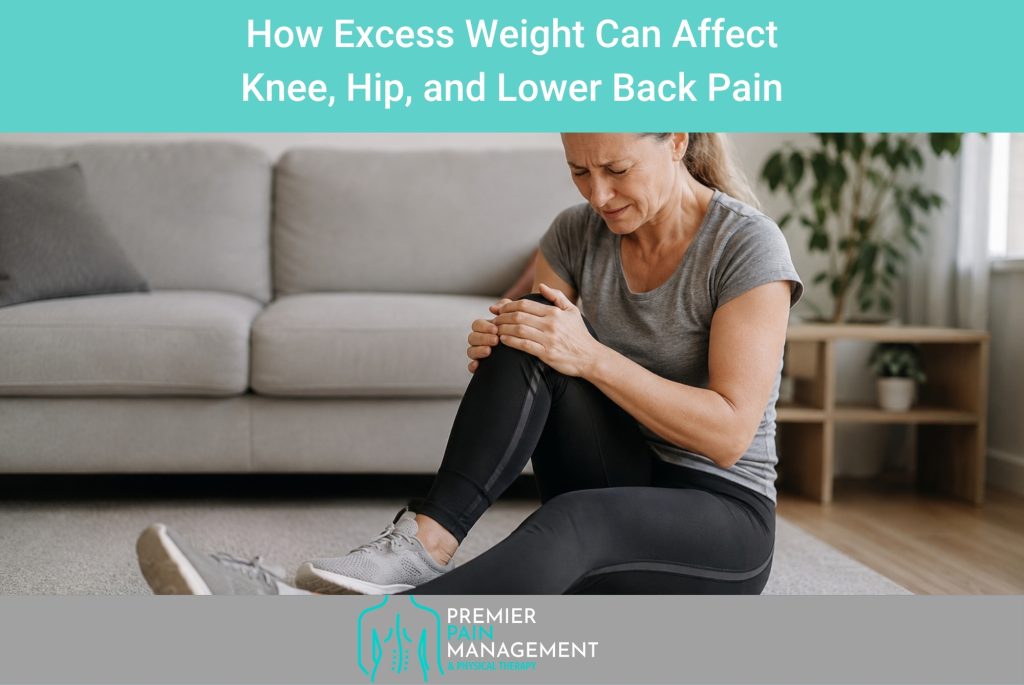
Joint and back pain can have many causes, including injury, arthritis, age-related changes, muscle weakness, repetitive stress, and underlying medical conditions. Body weight can also play an important role. Carrying excess weight may increase mechanical stress on weight-bearing joints and the spine, potentially contributing to knee pain, hip pain, and lower back pain.
The relationship between body weight and musculoskeletal pain is more complex than simply carrying additional pounds. Excess adipose tissue can influence movement patterns, physical activity, muscle function, joint loading, and systemic inflammation. These factors may interact with conditions such as osteoarthritis and degenerative changes of the spine.
At Premier Pain Management in Highlands Ranch, Colorado, patients experiencing persistent knee, hip, or lower back pain can receive a comprehensive evaluation designed to identify contributing factors and develop an individualized treatment strategy.
Understanding the Connection Between Body Weight and Musculoskeletal Pain
Weight-Bearing Joints Experience Repeated Forces
The knees and hips are weight-bearing joints. They repeatedly absorb and transfer forces as you stand, walk, climb stairs, exercise, and perform everyday activities.
The amount of force experienced by a joint during movement can be greater than a person’s static body weight because movement creates additional mechanical forces. As body weight increases, the cumulative load placed on the knees, hips, and supporting musculoskeletal structures may also increase.
This does not mean that everyone who is overweight will develop joint pain. Genetics, previous injuries, muscle strength, activity level, anatomy, occupational demands, age, and other health factors all influence an individual’s risk.
Excess Weight May Influence More Than Joint Loading
Adipose tissue is metabolically active. It can produce signaling molecules associated with inflammatory processes. Researchers continue to investigate how these metabolic effects may contribute to osteoarthritis and musculoskeletal symptoms.
For this reason, the relationship between excess weight and joint pain involves both biomechanical stress and biological factors.
How Excess Weight Can Affect Knee Pain
Increased Mechanical Stress on the Knee
The knee is particularly susceptible to weight-related stress because it supports the body while allowing substantial movement.
Walking, climbing stairs, standing from a chair, squatting, and running can generate forces through the knee that exceed a person’s resting body weight. Additional body weight may therefore increase the cumulative stress experienced by the knee during thousands of steps each day.
Over time, this increased loading may contribute to pain, particularly in people who already have arthritis, cartilage damage, previous knee injuries, or biomechanical problems.
Knee Osteoarthritis and Body Weight
Knee osteoarthritis occurs when changes involving cartilage, bone, synovium, and other joint structures gradually affect joint function. Common symptoms include:
- Knee pain during activity
- Stiffness after rest
- Swelling
- Reduced range of motion
- Grinding or clicking sensations
- Difficulty climbing stairs
- Pain when standing from a seated position
- Reduced walking tolerance
Excess body weight is considered an important modifiable risk factor for knee osteoarthritis. It may also contribute to greater symptom severity in some patients who already have the condition.
Why Stairs Can Become Particularly Difficult
Walking up and down stairs places substantial demands on the knees. The quadriceps muscles must control and stabilize the joint while the knee bends under load.
Patients may notice pain around or behind the kneecap, along the joint line, or throughout the knee. Weight is only one possible contributing factor, however. Patellofemoral pain, meniscus injuries, tendinopathy, bursitis, osteoarthritis, and other conditions can produce similar symptoms.
A medical evaluation can help determine what is actually causing the pain.
How Excess Weight Can Affect Hip Pain
Greater Loading Through the Hip Joint
The hip is a large ball-and-socket joint responsible for supporting body weight while allowing walking, bending, rotation, and other movements.
Additional body weight can increase the forces transmitted through the hips during standing and movement. If cartilage or other joint structures are already compromised, increased mechanical loading may contribute to discomfort.
Hip Osteoarthritis
Hip osteoarthritis can cause:
- Groin pain
- Pain along the front or side of the hip
- Buttock discomfort
- Pain that radiates toward the thigh or knee
- Morning stiffness
- Difficulty putting on shoes or socks
- Reduced hip mobility
- Difficulty getting into or out of a vehicle
- Pain during prolonged walking or standing
Although excess weight can be a contributing factor, hip pain should not automatically be attributed to weight.
Other possible causes include bursitis, tendinopathy, labral injuries, muscle strains, referred pain from the lumbar spine, and other orthopedic or neurological conditions.
Changes in Walking Mechanics
Pain and excess weight may sometimes alter the way a person walks. Changes in gait can redistribute forces across the hips, knees, pelvis, and spine.
For example, someone experiencing knee or hip pain may unconsciously shift more weight onto the opposite side. Over time, compensatory movement patterns can contribute to discomfort elsewhere.
This is one reason comprehensive pain management often evaluates more than the specific location where symptoms are felt.
How Excess Weight Can Affect Lower Back Pain
Increased Mechanical Demand on the Spine
The lumbar spine supports much of the upper body’s weight while permitting bending, twisting, and other movements.
Carrying additional weight can increase the mechanical demands placed on the lumbar spine and surrounding muscles. Depending on how weight is distributed, posture and spinal alignment may also change.
The muscles of the abdomen, back, hips, and pelvis must work together to stabilize the spine. When these structures become overloaded, deconditioned, or imbalanced, lower back discomfort may develop or worsen.
Postural Changes and Lumbar Stress
In some individuals, increased abdominal weight may shift the body’s center of gravity forward. The body may compensate by altering pelvic positioning or increasing the curvature of the lower spine.
These changes do not automatically cause back pain, but they may increase muscular demands and contribute to discomfort in susceptible individuals.
Excess Weight and Degenerative Spine Conditions
Lower back pain may be associated with conditions such as:
- Degenerative disc disease
- Lumbar facet joint arthritis
- Herniated or bulging discs
- Spinal stenosis
- Sacroiliac joint dysfunction
- Muscle and ligament strains
- Nerve compression
- Sciatica
Body weight may be one contributing factor among many. Because several spinal conditions can produce similar symptoms, determining the underlying source of persistent pain is important before developing a treatment plan.
The Role of Inflammation in Joint and Back Pain
Adipose Tissue Is Biologically Active
One of the most important developments in understanding obesity and musculoskeletal health is the recognition that adipose tissue is not simply stored energy.
Fat tissue can release substances involved in metabolic and inflammatory signaling. Scientists have investigated molecules known as adipokines and their potential role in cartilage metabolism, inflammation, and osteoarthritis.
This may help explain why the association between obesity and arthritis is not entirely attributable to mechanical loading.
Inflammation Is Only Part of the Picture
Musculoskeletal pain is complex. Inflammation may contribute to some conditions, but pain can also originate from mechanical irritation, nerve compression, muscle dysfunction, joint degeneration, injury, or several factors simultaneously.
Effective treatment therefore begins with identifying the likely source of symptoms rather than assuming weight or inflammation is solely responsible.
The Weight-Pain-Activity Cycle
Pain Can Make Physical Activity More Difficult
People with knee, hip, or lower back pain may understandably reduce their physical activity because movement hurts.
Unfortunately, prolonged inactivity can sometimes lead to:
- Reduced muscle strength
- Decreased flexibility
- Poorer cardiovascular conditioning
- Increased joint stiffness
- Reduced balance
- Lower exercise tolerance
- Additional weight gain
These changes can make returning to activity increasingly difficult.
Muscle Strength Matters
Strong muscles help support and stabilize joints.
The quadriceps and hamstrings support the knees. The gluteal and surrounding hip muscles stabilize the pelvis and hips. The abdominal, spinal, pelvic, and hip muscles contribute to trunk stability.
Improving strength may help distribute forces more efficiently and improve functional capacity, even before substantial changes in body weight occur.
Can Losing Weight Reduce Joint Pain?
For individuals who are overweight or obese, gradual weight reduction may decrease stress on weight-bearing joints and can be an important component of managing osteoarthritis and other musculoskeletal conditions.
However, weight management should not be presented as the only solution to pain.
A patient may also need treatment for an underlying condition such as arthritis, nerve compression, a disc problem, muscle dysfunction, or an injury.
The most effective strategy often combines appropriate medical treatment with sustainable lifestyle changes.
How Much Weight Do You Need to Lose to Make a Difference?
There is no single amount of weight loss that guarantees pain relief. Individual outcomes depend on the condition causing pain, the severity of structural changes, physical conditioning, age, activity level, and other health factors.
Even modest, sustainable changes may have health and mobility benefits for some patients.
Rather than pursuing rapid or extreme weight loss, patients may benefit from focusing on realistic improvements in nutrition, activity, strength, mobility, and overall health under appropriate medical guidance.
Exercising When Your Knees, Hips, or Back Hurt
Start With Joint-Friendly Movement
Pain can make exercise intimidating, particularly if previous attempts have worsened symptoms. The appropriate exercise program depends on the diagnosis and individual physical capabilities.
Lower-impact activities may include:
- Walking as tolerated
- Stationary cycling
- Water exercise
- Swimming
- Gentle mobility exercises
- Resistance training
- Therapeutic exercise
The objective is not to exercise through severe pain. It is to find tolerable forms of movement that can gradually improve strength, endurance, and function.
Physical Therapy May Help
Physical therapy may be particularly useful for patients who have difficulty exercising because of pain.
A personalized rehabilitation program may address:
- Muscle weakness
- Limited range of motion
- Poor balance
- Abnormal movement patterns
- Core stability
- Hip and knee strength
- Flexibility
- Walking mechanics
As physical function improves, patients may find it easier to become consistently active.
When Knee, Hip, or Back Pain Should Be Evaluated
Occasional mild soreness after unusual activity may resolve with rest and conservative care. Persistent or worsening symptoms deserve further evaluation.
Consider scheduling an assessment if pain:
- Persists or repeatedly returns
- Interferes with walking
- Makes stairs difficult
- Disrupts sleep
- Limits work or daily activities
- Causes significant stiffness
- Is associated with swelling
- Radiates into an arm or leg
- Causes numbness or tingling
- Continues despite conservative home care
Early evaluation may help identify treatable problems before symptoms significantly reduce mobility.
Warning Signs That Require Prompt Medical Attention
Some symptoms require more urgent assessment. Seek prompt medical care for severe pain following significant trauma, inability to bear weight, major swelling or deformity, fever with a painful or swollen joint, or rapidly worsening neurological symptoms.
Lower back pain accompanied by new bowel or bladder dysfunction, numbness in the groin or saddle region, or significant/progressive leg weakness requires urgent medical evaluation because these symptoms can indicate serious nerve compression.
How Knee, Hip, and Lower Back Pain Is Diagnosed
Medical History
A detailed history helps identify patterns and potential causes. Your provider may ask:
- When did the pain begin?
- Where exactly is it located?
- Does it radiate?
- What activities make it worse?
- What makes it better?
- Have you experienced previous injuries?
- Does pain occur at rest or at night?
- Are numbness, tingling, or weakness present?
- How does the pain affect your daily activities?
Physical Examination
The examination may assess strength, flexibility, reflexes, sensation, joint stability, range of motion, walking mechanics, posture, and areas of tenderness.
Diagnostic Imaging
Not every patient with joint or back pain requires imaging.
When clinically appropriate, X-rays may help evaluate bones, joint alignment, fractures, and arthritic changes. MRI or other advanced imaging may be considered when soft-tissue injuries, disc abnormalities, nerve compression, or other specific conditions are suspected.
The appropriate test depends on the patient’s symptoms and examination findings.
Treatment Options for Weight-Related Joint and Back Pain
Treatment should address the underlying diagnosis rather than weight alone.
Lifestyle and Activity Modification
Changing activities that repeatedly aggravate symptoms can provide irritated tissues with an opportunity to recover while maintaining appropriate movement.
The goal is generally not complete inactivity but finding a manageable balance between activity and recovery.
Physical Therapy and Rehabilitation
Rehabilitation can improve strength, mobility, flexibility, coordination, and movement mechanics.
Strengthening the muscles around painful joints may improve stability and make everyday movement easier.
Medications
Depending on the diagnosis and the patient’s medical history, medications may sometimes be used to help manage pain or inflammation.
Medication decisions should be individualized because certain drugs may not be appropriate for patients with particular kidney, gastrointestinal, cardiovascular, or other medical conditions.
Interventional Pain Management
When conservative treatment does not provide adequate relief, certain patients may be candidates for targeted procedures.
Depending on the diagnosis, pain location, and clinical findings, interventional options may include therapeutic injections or other image-guided pain management procedures.
These treatments are not appropriate for every condition, and the potential benefits and risks should be discussed with a qualified provider.
Weight Management as Part of a Broader Treatment Strategy
For patients carrying excess weight, sustainable weight management may complement medical treatment by reducing mechanical demands on weight-bearing structures and supporting overall health.
The goal should be comprehensive improvement rather than focusing exclusively on the number on a scale.
Why Pain Management Can Help Patients Become More Active
A common challenge occurs when someone is advised to exercise or lose weight but pain makes activity difficult.
Appropriate pain management may help address this barrier.
By identifying and treating the source of pain while improving strength and mobility, patients may gradually become more capable of participating in physical activity. Increased activity can then support conditioning, mobility, and weight-management goals.
This coordinated approach can be more practical than expecting someone with significant musculoskeletal pain to simply exercise through their symptoms.
A Comprehensive Approach to Knee, Hip, and Back Pain
Pain management should focus on the entire patient.
Body weight can be clinically relevant without defining the patient or explaining every symptom. A thorough evaluation should consider medical history, injuries, biomechanics, physical conditioning, occupation, activity level, imaging findings when appropriate, and the characteristics of the pain itself.
For some patients, excess weight is an important contributing factor. For others, arthritis, nerve compression, injury, structural abnormalities, or muscle dysfunction may be more significant.
Understanding these distinctions helps guide appropriate treatment.
Frequently Asked Questions About Weight and Joint Pain
Can being overweight cause knee pain?
Excess body weight can increase mechanical stress on the knees and is an established risk factor for knee osteoarthritis. However, knee pain can have many other causes, including injuries, tendinopathy, bursitis, meniscus problems, and patellofemoral disorders. Persistent knee pain should be properly evaluated.
Can excess weight cause hip pain?
Additional body weight may increase mechanical loading through the hip joint and may contribute to symptoms in some patients, particularly those with osteoarthritis. Hip pain can also arise from bursitis, tendon problems, labral injuries, muscle conditions, or referred pain from the spine.
Can belly fat contribute to lower back pain?
Increased abdominal weight may alter the body’s center of gravity and increase the demands placed on the lumbar spine and supporting muscles. This can contribute to discomfort in some individuals, but persistent back pain should be evaluated for other potential causes.
Will losing weight make my knees hurt less?
Weight reduction may decrease stress on the knees and can improve symptoms for some people with knee osteoarthritis. The degree of improvement varies, and other treatments may still be necessary depending on the underlying condition.
Will losing weight help hip arthritis?
Weight management may reduce overall mechanical demands on weight-bearing joints and can form part of a comprehensive osteoarthritis management plan. However, established structural joint changes cannot necessarily be reversed through weight loss alone.
Can weight loss help lower back pain?
Some individuals experience improved mobility or reduced back symptoms following sustainable weight reduction, particularly when weight management is combined with strengthening and physical activity. Because back pain has numerous possible causes, weight loss should not replace appropriate diagnosis and treatment.
Why do my knees hurt more when going downstairs?
Descending stairs requires substantial control from the quadriceps and increases loading across parts of the knee, particularly the patellofemoral joint. Conditions such as patellofemoral pain and osteoarthritis may become particularly noticeable during stair use.
Why does my hip hurt after walking?
Hip pain after walking may result from osteoarthritis, bursitis, tendinopathy, muscle fatigue, altered biomechanics, or referred pain from the lower back. Excess weight may increase joint loading but should not automatically be assumed to be the cause.
Is walking good for joint pain if I am overweight?
Walking can be an effective form of physical activity for many people, but the appropriate amount depends on symptoms and underlying conditions. If walking consistently causes significant pain, a clinician or physical therapist can help identify alternative low-impact activities and develop a gradual progression plan.
Is swimming better than walking for painful joints?
Swimming and water-based exercise reduce weight-bearing stress while allowing the muscles and cardiovascular system to work. They can be useful alternatives for people who find land-based exercise uncomfortable.
Should I stop exercising if my knees hurt?
Not necessarily. Complete inactivity may contribute to weakness and stiffness. However, sharp, severe, or progressively worsening pain should not simply be ignored. Modifying the type, duration, or intensity of activity may be appropriate while the cause of pain is evaluated.
Does weight make arthritis progress faster?
Excess body weight is associated with increased risk and progression of knee osteoarthritis in many patients. Mechanical loading and metabolic factors associated with adipose tissue may both contribute.
Can strengthening my legs help even if I do not lose weight?
Yes. Improving muscle strength can enhance joint stability, movement mechanics, and functional capacity. Weight management may provide additional benefits when appropriate, but strength and conditioning are valuable independently.
Why does my back hurt when I stand for a long time?
Prolonged standing can fatigue the muscles supporting the spine and may aggravate conditions involving the discs, facet joints, sacroiliac joints, or spinal nerves. Body weight can add to mechanical demands, but determining the underlying cause is important when symptoms persist.
Can joint pain make weight loss harder?
Yes. Pain may limit exercise and everyday activity, making weight management more challenging. Addressing pain, improving mobility, and identifying tolerable forms of exercise can help patients overcome this barrier.
Do I need an X-ray or MRI for joint or back pain?
Not always. Imaging decisions depend on symptoms, physical examination findings, duration of pain, history of trauma, neurological findings, and other clinical factors. Your provider can determine whether imaging is likely to provide useful information.
When should I see a pain management specialist?
Consider an evaluation when knee, hip, or back pain persists, repeatedly returns, interferes with daily activities, limits exercise, disrupts sleep, or has not improved adequately with initial conservative measures.
Take the Next Step Toward Better Mobility
Excess weight can influence knee, hip, and lower back pain through increased mechanical loading, changes in movement and posture, reduced activity, and metabolic factors associated with adipose tissue. However, weight is rarely the only consideration.
Effective pain care begins with determining why you hurt.
If knee, hip, or lower back pain is keeping you from walking comfortably, exercising, working, sleeping, or participating in activities you enjoy, Premier Pain Management can evaluate your symptoms and discuss treatment options based on your individual condition.
Contact Information
Premier Pain Management
8671 S Quebec St. Suite 150
Highlands Ranch, CO 80130
Phone: (303) 683-6868
Website: premierpaingroup.com
Appointments: premierpaingroup.com/appointments/