
A herniated disc can turn ordinary activities—sitting at a desk, driving, exercising, bending over, or even sleeping—into uncomfortable experiences. Depending on the location and severity of the disc problem, patients may experience localized back or neck pain, radiating pain, numbness, tingling, or weakness.
For patients looking for nonsurgical options, spinal decompression therapy may be considered as part of a comprehensive treatment plan. This approach is designed to gently reduce pressure within and around affected spinal structures, potentially providing an environment that supports symptom relief and improved function.
At Premier Pain Management in Highlands Ranch, Colorado, treatment begins by determining what is actually causing a patient’s symptoms. A herniated disc seen on an imaging study does not automatically mean it is responsible for the pain. A careful evaluation can help determine whether disc-related nerve compression is contributing to symptoms and which treatment options may be appropriate.
What Is a Herniated Disc?
Understanding the Structure of a Spinal Disc
The spine contains a series of vertebrae separated by intervertebral discs. These discs act as cushions between the bones and help the spine absorb forces while allowing movement.
Each disc has two primary components: a tougher outer layer called the annulus fibrosus and a softer, gel-like center called the nucleus pulposus.
A herniated disc occurs when material from inside the disc pushes through or beyond a weakened or damaged portion of the outer disc. Depending on its location, the herniated material can irritate or compress nearby spinal nerve roots.
Herniated Disc vs. Bulging Disc
Although the terms are sometimes used interchangeably, a bulging disc and a herniated disc are not necessarily the same condition.
A disc bulge generally involves a broader extension of the disc beyond its normal boundary. A herniation is typically more focal, with disc material displaced through an area of the outer disc.
Either condition may be asymptomatic. Problems are more likely when disc changes cause inflammation or affect nearby nerves.
What Are the Symptoms of a Herniated Disc?
Symptoms Depend on the Location of the Disc
Herniated discs most commonly occur in the lumbar spine, or lower back, and the cervical spine, or neck.
A lumbar herniated disc may cause:
- Lower back pain
- Pain extending into the buttock, thigh, calf, or foot
- Sciatica
- Numbness or tingling in the leg or foot
- Muscle weakness
- Pain aggravated by certain movements or positions
A cervical herniated disc may cause:
- Neck pain
- Shoulder or upper-back discomfort
- Pain radiating down an arm
- Numbness or tingling in the hand or fingers
- Arm or hand weakness
Symptoms vary significantly among patients. The size of a herniation alone does not always predict how much pain a person will experience.
What Is Spinal Decompression Therapy?
A Nonsurgical Approach to Spinal Pain
Nonsurgical spinal decompression generally involves controlled mechanical traction applied to the spine. The goal is to gently stretch or unload targeted areas of the spine in a carefully controlled manner.
Treatment parameters may be adjusted according to the affected spinal region, the patient’s condition, symptoms, and tolerance.
Spinal decompression should not be confused with surgical spinal decompression. Surgical decompression encompasses procedures designed to physically relieve pressure on neural structures and is generally reserved for specific clinical situations.
Can Spinal Decompression Help a Herniated Disc?
The Goal Is to Reduce Mechanical Stress and Symptoms
For appropriately selected patients, nonsurgical spinal decompression may be incorporated into conservative care for disc-related back or neck symptoms.
Traction-based decompression is intended to temporarily alter mechanical forces affecting the spine. This may reduce stress on painful spinal structures and, in some patients, improve symptoms associated with nerve irritation.
It is important, however, to have realistic expectations. Spinal decompression should not be described as a treatment that simply “puts a disc back into place.” Herniated discs and their associated symptoms are more complex than that.
The primary clinical goals are generally to reduce pain, improve mobility, decrease nerve-related symptoms when possible, and help patients return to normal activities.
What Does the Research Say?
Research into mechanical traction and decompression for disc-related conditions has produced varying results. Some patients experience meaningful improvement, particularly when traction is used as one component of a broader rehabilitation program. However, the effectiveness of treatment depends on factors such as patient selection, diagnosis, treatment technique, and accompanying therapies.
For that reason, decompression is best viewed as one potential component of individualized conservative treatment rather than a guaranteed solution for every herniated disc.
How Could Decompression Reduce Herniated Disc Symptoms?
Reducing Pressure on Sensitive Structures
A herniated disc can contribute to pain through both mechanical nerve compression and inflammation around a nerve root.
Controlled traction may temporarily increase separation between spinal structures and alter forces acting on discs and joints. For certain patients, this unloading may decrease irritation and make movement more comfortable.
Helping Patients Become More Active
Pain can create a cycle in which patients avoid movement, lose strength, become stiffer, and then experience even greater difficulty with everyday activities.
If decompression reduces symptoms enough to make movement more comfortable, patients may be better able to participate in therapeutic exercise and rehabilitation. Restoring mobility, strength, and functional capacity is often an important part of long-term management.
Who May Be a Candidate for Spinal Decompression?
Evaluation Comes Before Treatment
Spinal decompression is not automatically appropriate simply because an MRI shows a herniated disc.
A healthcare professional should evaluate the patient’s symptoms, medical history, physical examination findings, neurologic status, and relevant diagnostic imaging.
Potential candidates may include selected patients experiencing disc-related neck or lower-back pain, radiating pain, or symptoms associated with nerve irritation who are appropriate for conservative care.
The decision should always be individualized.
When Might Spinal Decompression Not Be Appropriate?
Certain Conditions Require Additional Caution
Spinal decompression or mechanical traction may not be appropriate for every patient. Depending on the individual’s medical history and condition, precautions or contraindications may include certain fractures, spinal instability, severe osteoporosis, malignancy affecting the spine, infection, or other conditions in which traction could present additional risk.
Patients who have previously undergone spinal surgery or have implanted spinal hardware may also require additional evaluation before certain therapies are considered.
This is another reason professional assessment is important before beginning decompression treatment.
How Is a Herniated Disc Diagnosed?
Medical History and Physical Examination
Diagnosis typically begins with a detailed discussion of symptoms.
The provider may ask:
- When did the symptoms begin?
- Where does the pain travel?
- Is there numbness or tingling?
- Are certain positions better or worse?
- Has there been any muscle weakness?
- Did symptoms begin after an injury?
- What treatments have already been attempted?
Neurological Examination
When nerve involvement is suspected, the examination may include assessments of muscle strength, sensation, reflexes, and specific movements or provocative tests.
These findings can help identify which spinal nerve may be affected.
Diagnostic Imaging
MRI is commonly used when detailed evaluation of discs, nerve roots, and other soft tissues is clinically necessary.
However, imaging findings must be interpreted alongside the patient’s symptoms and examination. Disc degeneration, bulges, and even herniations can sometimes be present in people who have little or no pain.
The objective is therefore not simply to “treat the MRI.” It is to identify whether the imaging findings correspond with the patient’s clinical symptoms.
What Happens During a Spinal Decompression Session?
Treatment Is Generally Performed While the Patient Is Supported
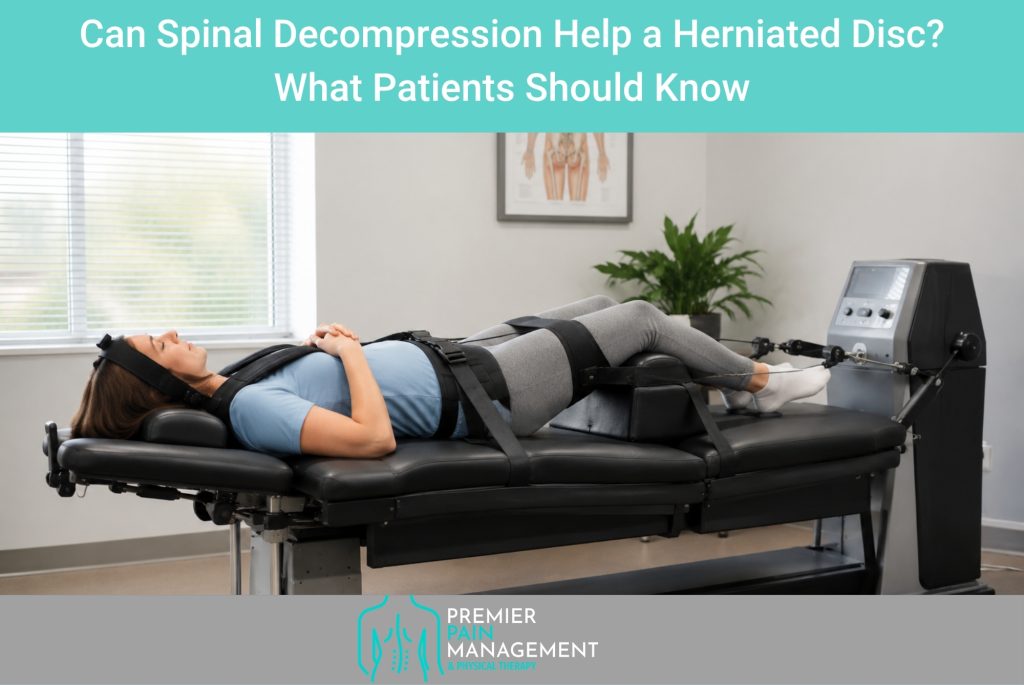
During nonsurgical spinal decompression, the patient typically lies on a specialized treatment table. Depending on the system and area being treated, positioning equipment or harnesses may be used to stabilize the body.
Controlled traction is then applied according to the treatment plan.
Patients should communicate with their provider throughout treatment, especially if they experience worsening pain, new numbness, tingling, or other unusual symptoms.
How Long Does Treatment Take?
Treatment schedules vary. The number and frequency of sessions depend on factors such as the diagnosis, severity and duration of symptoms, response to treatment, and overall care plan.
Rather than assuming every patient requires a predetermined number of sessions, progress should be periodically reassessed.
Is Spinal Decompression Painful?
Treatment Should Be Carefully Monitored
Many patients tolerate controlled decompression well, although individual experiences vary.
Some patients may notice temporary soreness after treatment, particularly early in a treatment program. Significant worsening of symptoms should be reported to the treating provider.
Treatment intensity can often be adjusted according to the patient’s response and tolerance.
Does a Herniated Disc Always Require Surgery?
Many Patients Are Initially Treated Conservatively
A herniated disc does not automatically mean surgery is necessary. Many disc-related symptoms can improve over time with appropriate nonsurgical management.
Depending on the patient’s condition, conservative treatment may involve:
- Activity modification
- Physical or rehabilitative therapy
- Therapeutic exercise
- Medications when appropriate
- Heat or cold therapy
- Spinal decompression or traction in selected cases
- Other interventional pain-management treatments when clinically appropriate
The most appropriate combination depends on the underlying diagnosis and the patient’s response to treatment.
When Is More Urgent Medical Attention Necessary?
Know the Warning Signs
Most back pain is not an emergency, but certain neurological symptoms require prompt medical evaluation.
Seek urgent medical attention for symptoms such as new bowel or bladder dysfunction, numbness in the saddle or groin region, rapidly progressive weakness, or severe neurological changes.
These symptoms can potentially indicate significant compression of neural structures, including cauda equina syndrome in the lower spine, and should not be managed solely with routine conservative treatment.
Patients with significant trauma, fever associated with severe back pain, or other concerning systemic symptoms should also seek appropriate medical evaluation.
What Other Treatments May Be Combined With Spinal Decompression?
Comprehensive Treatment May Produce Better Functional Results
Disc-related pain often benefits from a multimodal approach rather than relying on one treatment alone.
Depending on the diagnosis, a treatment plan may incorporate rehabilitation designed to improve flexibility, strength, posture, body mechanics, and movement patterns.
The objective is not merely short-term pain relief. Ideally, treatment also addresses functional limitations and factors that may contribute to recurring symptoms.
Can You Exercise With a Herniated Disc?
Movement Is Often Part of Recovery
Complete inactivity is rarely the long-term solution for uncomplicated disc-related pain. Appropriate movement can help preserve mobility and maintain supporting musculature.
However, exercise should be selected according to the patient’s condition. A movement that is beneficial for one person may aggravate symptoms in another.
Patients with a symptomatic herniated disc should discuss exercise recommendations with a qualified healthcare professional, particularly when pain radiates into an arm or leg or neurological symptoms are present.
Can a Herniated Disc Heal on Its Own?
Disc Symptoms Can Improve Over Time
Some herniated discs become less symptomatic with time and conservative treatment. In some cases, the body may gradually resorb portions of herniated disc material.
Symptom improvement does not necessarily mean that the disc has returned to its original anatomy. Instead, inflammation may decrease, mechanical irritation may improve, and the nervous system may become less irritated.
This distinction is important because successful treatment should ultimately be measured by meaningful improvements in pain, function, mobility, and quality of life—not solely by changes on an imaging study.
Frequently Asked Questions About Spinal Decompression and Herniated Discs
Does spinal decompression put a herniated disc back into place?
It is more accurate to say that nonsurgical decompression changes mechanical forces affecting the spine rather than claiming it physically “puts the disc back.” The treatment may help reduce symptoms in appropriately selected patients, but outcomes vary.
Can spinal decompression cure a herniated disc?
Spinal decompression should not be considered a guaranteed cure. It may be one component of conservative management intended to decrease symptoms and improve function.
Can spinal decompression help sciatica?
Possibly. Sciatica describes symptoms caused by irritation or compression of the sciatic nerve roots. If a lumbar disc problem is contributing to that irritation, decompression or traction may be considered as part of conservative treatment for selected patients.
How many spinal decompression treatments will I need?
There is no universal number. The appropriate treatment schedule depends on the diagnosis, severity of symptoms, duration of the condition, medical history, treatment response, and other factors.
How quickly can spinal decompression provide relief?
Response varies considerably. Some patients may notice changes relatively early, while others may require a longer course of conservative treatment. Lack of expected improvement should prompt reassessment of the diagnosis and treatment strategy.
Can spinal decompression prevent back surgery?
It is not possible to guarantee that spinal decompression will prevent surgery. Many patients with disc-related symptoms can be managed nonsurgically, but some conditions ultimately require surgical evaluation.
Is spinal decompression the same as traction?
Nonsurgical spinal decompression is generally a form of controlled traction, although equipment, positioning, force patterns, and treatment protocols can vary.
Can decompression make a herniated disc worse?
Any treatment can potentially aggravate symptoms in some individuals. Proper patient selection, appropriate treatment parameters, and monitoring are therefore important. New or worsening neurological symptoms should be reported promptly.
Can I receive decompression if I have had back surgery?
Previous spinal surgery does not automatically answer whether decompression is appropriate. The type of surgery, presence of hardware, spinal stability, current symptoms, and other factors must be evaluated before treatment.
Do I need an MRI before spinal decompression?
Not every patient automatically requires an MRI. Imaging decisions should be based on symptoms, examination findings, medical history, neurological findings, and clinical judgment.
Is spinal decompression appropriate for neck herniated discs?
Controlled cervical traction may be considered for certain cervical disc-related conditions, but a professional evaluation is important because neck and arm symptoms can have multiple causes.
What should I do if I have numbness or weakness from a herniated disc?
Persistent or progressive neurological symptoms deserve medical evaluation. Progressive weakness, significant loss of function, or bowel or bladder changes should receive prompt or emergency evaluation depending on severity.
Is bed rest recommended for a herniated disc?
Prolonged bed rest is generally not the goal for uncomplicated back pain. Appropriate activity and gradual return to movement are often important, although specific recommendations depend on the patient’s diagnosis and symptoms.
Can a herniated disc come back after symptoms improve?
Disc-related symptoms can recur. Maintaining appropriate physical activity, strength, mobility, lifting mechanics, and other healthy movement habits may help reduce mechanical stress on the spine, although no strategy can guarantee that symptoms will never return.
How do I know whether spinal decompression is right for me?
The best starting point is a clinical evaluation. A provider can assess your symptoms, neurological function, health history, previous treatments, and available imaging to determine whether decompression or another treatment approach is appropriate.
Herniated Disc Treatment in Highlands Ranch, CO
Living with a herniated disc does not necessarily mean living with persistent pain—or immediately pursuing surgery. The first step is identifying the source of the symptoms and understanding which treatments are appropriate for the individual patient.
For selected patients, nonsurgical spinal decompression may be considered as part of a broader conservative treatment strategy. The goal should be more than simply treating an imaging finding. Effective pain management focuses on reducing symptoms, restoring movement, improving daily function, and helping patients return to the activities that matter to them.
If you are experiencing back pain, neck pain, sciatica, radiating arm or leg pain, numbness, tingling, or other symptoms that may be associated with a herniated disc, Premier Pain Management can evaluate your condition and discuss appropriate treatment options.
Contact Information
Premier Pain Management
8671 S Quebec St. Suite 150
Highlands Ranch, CO 80130
Phone: (303) 683-6868
Website: premierpaingroup.com
Appointments: premierpaingroup.com/appointments/