
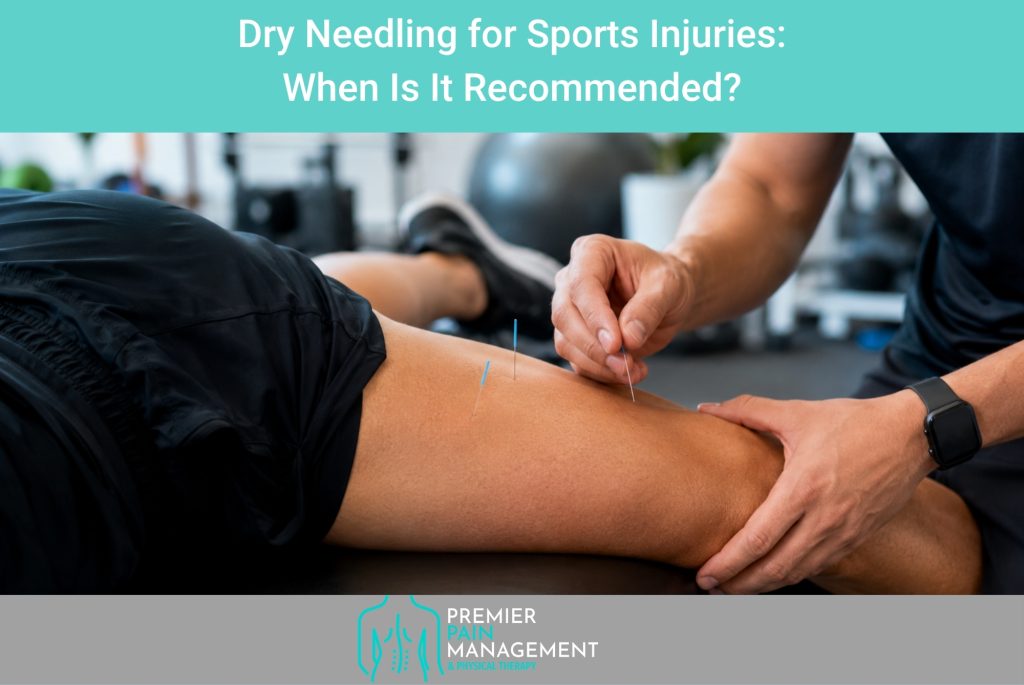
Sports injuries can affect athletes at every level, from recreational runners and weekend golfers to competitive athletes. Muscle strains, persistent tightness, restricted mobility, and painful trigger points can interfere with training, athletic performance, and everyday movement. When muscle-related pain does not adequately improve with rest and conventional rehabilitation strategies, dry needling may be considered as part of a comprehensive treatment plan.
At Premier Pain Management in Highlands Ranch, Colorado, dry needling may be incorporated into individualized care for appropriate patients experiencing sports-related musculoskeletal pain. By targeting specific areas of muscle tension and dysfunction, dry needling is intended to reduce pain, improve muscle function, and support rehabilitation.
Understanding what dry needling does—and when it may be recommended—can help athletes make informed decisions about their recovery.
What Is Dry Needling?
Dry needling is a therapeutic technique in which a trained healthcare professional inserts very thin, solid needles into targeted areas of muscle or connective tissue. Unlike an injection, nothing is delivered through the needle, which is why the procedure is described as “dry.”
Treatment commonly focuses on myofascial trigger points, sometimes described as sensitive or hyperirritable areas within taut bands of skeletal muscle. These areas may be painful when pressed and can contribute to localized discomfort, referred pain, muscle tightness, and impaired movement.
The technique may also be used to address other neuromuscular or musculoskeletal structures based on the patient’s symptoms and clinical examination.
Is Dry Needling the Same as Acupuncture?
No. Although both techniques use thin needles, dry needling and acupuncture are based on different clinical frameworks.
Dry needling is generally used within modern musculoskeletal rehabilitation to target muscles, trigger points, and other tissues associated with pain or movement dysfunction. Acupuncture originated within traditional Chinese medicine and may involve selecting points based on different therapeutic principles.
The appropriate treatment depends on the patient’s condition, goals, and healthcare provider’s recommendations.
How Can Sports Injuries Cause Muscle Dysfunction?
Athletic activity places repetitive mechanical demands on muscles, tendons, joints, and connective tissues. During training or competition, an athlete may experience sudden injury from an awkward movement, collision, sprint, jump, or fall. Problems can also develop gradually from repetitive loading or inadequate recovery.
In response to an injury, surrounding muscles may tighten to protect the affected area. Although this protective response can initially be useful, persistent muscle guarding can contribute to stiffness, altered movement patterns, and pain.
Athletes may also develop trigger points or areas of increased muscle sensitivity following repetitive use.
Common Contributors to Sports-Related Muscle Pain
Sports-related muscle dysfunction may be associated with:
- Repetitive movements
- Sudden increases in training intensity
- Muscle strains
- Inadequate recovery between workouts
- Altered biomechanics
- Muscle weakness or imbalance
- Reduced flexibility or mobility
- Previous injuries
- Compensatory movement patterns
- Overuse of specific muscle groups
Identifying why the muscle became painful is important. Dry needling may address certain muscular symptoms, but lasting improvement frequently requires treating the underlying factors contributing to the injury.
How Does Dry Needling Work?
The physiological effects of dry needling continue to be studied. Current clinical models suggest that needling targeted tissues may influence local muscle activity, pain processing, blood flow, and neuromuscular function.
When a needle enters a sensitive trigger point, a brief involuntary muscle contraction known as a local twitch response may sometimes occur. This response is not necessary for every treatment, but it can occur when treating certain trigger points.
Effects on Muscle Tension
One objective of dry needling is to reduce excessive muscle tension and sensitivity. When painful muscles relax and movement becomes more comfortable, patients may be better able to participate in stretching, strengthening, and rehabilitation exercises.
Effects on Pain Processing
Dry needling may influence how pain signals are processed within the peripheral and central nervous systems. This may contribute to short-term reductions in musculoskeletal pain for some patients.
Pain is complex, however, and rarely results from a single trigger point or muscle. Treatment should therefore be based on a comprehensive evaluation rather than symptoms alone.
Effects on Movement
Pain and muscle guarding can limit normal joint movement. If treatment decreases muscular restriction, an athlete may temporarily experience improved mobility or greater comfort during movement.
These improvements can create an opportunity to progress therapeutic exercise and rehabilitation.
When Is Dry Needling Recommended for a Sports Injury?
Dry needling is not automatically appropriate for every athletic injury. It may be recommended when a clinical evaluation indicates that muscle tightness, trigger points, or neuromuscular dysfunction are contributing to pain or impaired movement.
Persistent Muscle Tightness
Athletes sometimes experience muscles that remain tight despite stretching, mobility exercises, rest, or massage. If examination identifies a muscular component to the problem, dry needling may be considered.
Myofascial Trigger Points
Trigger points may contribute to localized or referred pain. For example, a trigger point in one muscle can sometimes produce discomfort elsewhere in the body.
Targeting these areas may help reduce sensitivity and improve movement.
Muscle Strains During Rehabilitation
After the acute phase of certain muscle strains has passed, residual tightness or muscle dysfunction may remain. Dry needling may sometimes be incorporated into rehabilitation when clinically appropriate.
It is generally not intended to replace the normal biological healing process of injured tissue.
Overuse Injuries
Running, cycling, swimming, tennis, golf, weightlifting, and other repetitive activities can place substantial stress on specific muscle groups.
Dry needling may be considered when muscular tightness or trigger points contribute to an athlete’s overuse symptoms.
Restricted Range of Motion
Muscle guarding can limit joint mobility. If muscular restriction is an important cause of reduced range of motion, treating the affected muscles may help improve mobility and make rehabilitation exercises easier to perform.
Compensatory Muscle Pain
An athlete may change how they walk, run, lift, or move after an injury. These compensations can place additional stress on other muscles.
For example, an athlete protecting an injured knee may develop hip or lower-back tightness because of altered movement mechanics. Addressing secondary muscular problems may form part of a broader rehabilitation strategy.
What Sports Injuries May Be Treated With Dry Needling?
Whether dry needling is appropriate depends more on the tissues involved and clinical findings than on the name of the sport.
It may be incorporated into treatment plans for certain cases involving:
- Muscle strains
- Myofascial pain
- Sports-related neck or back pain
- Shoulder muscle dysfunction
- Hip and gluteal tightness
- Hamstring tightness or strains
- Quadriceps dysfunction
- Calf muscle tightness
- Muscle-related knee symptoms
- Plantar and lower-leg muscular dysfunction
- Tennis- or golf-related muscle overuse
- Running-related muscular pain
Not every case involving these conditions requires dry needling. Diagnosis and individualized evaluation are essential.
Dry Needling for Running Injuries
Runners repeatedly load the hips, thighs, calves, ankles, and feet. Training errors, sudden mileage increases, changes in terrain, inadequate recovery, or biomechanical problems may contribute to symptoms.
When muscular dysfunction is part of the problem, dry needling may target areas such as the gluteal muscles, quadriceps, hamstrings, or calf muscles.
However, treatment should also examine training volume, strength, mobility, footwear when relevant, and running mechanics.
Dry Needling for Shoulder and Upper-Body Sports Injuries
Baseball, tennis, swimming, volleyball, golf, and weightlifting can place substantial demands on the shoulder complex.
Muscles surrounding the shoulder blade and upper back help stabilize and coordinate shoulder movement. Tightness or dysfunction within these muscles may contribute to pain and altered mechanics.
Dry needling may sometimes be used alongside strengthening and mobility exercises to address the muscular component of shoulder symptoms.
Importantly, shoulder pain may also arise from rotator cuff injuries, labral problems, arthritis, instability, or other conditions requiring different treatment.
Dry Needling for Lower-Back and Hip Pain in Athletes
Athletic movements often require coordinated function of the lumbar spine, pelvis, hips, and core musculature.
Muscles around the lower back, hips, and buttocks may become painful following repetitive loading or compensation for another injury. When examination identifies myofascial pain or muscle dysfunction, dry needling may be incorporated into treatment.
A proper evaluation is particularly important because lower-back pain can have numerous causes, including conditions involving discs, joints, nerves, or other spinal structures.
Is Dry Needling Effective for Sports Injuries?
Research suggests that dry needling can provide improvements in pain and certain functional outcomes for some musculoskeletal conditions, particularly when used as part of a broader rehabilitation program. Results vary according to the condition being treated, technique, treatment duration, and individual patient factors.
It is important to distinguish short-term symptom improvement from complete injury recovery.
Reducing pain may help an athlete move more comfortably, but returning to sport safely usually requires restoration of strength, mobility, coordination, endurance, and sport-specific capacity.
For this reason, dry needling is often most useful as one component of a multimodal treatment strategy rather than a stand-alone solution.
What Happens During a Dry Needling Appointment?
Treatment begins with an assessment. Your healthcare professional may ask about how the injury occurred, what movements cause symptoms, how long the problem has been present, previous injuries, training habits, and other relevant medical information.
The provider may then assess movement, muscle function, tenderness, range of motion, and other factors.
During the Procedure
When dry needling is appropriate, the skin is prepared and thin sterile needles are inserted into selected treatment areas.
Patients may feel very little during some insertions. Other areas may produce a brief muscle twitch, aching sensation, pressure, or cramping feeling.
The number of areas treated and duration of treatment vary according to the patient’s condition.
After Treatment
Temporary muscle soreness is relatively common after dry needling and may resemble soreness after exercise.
Some patients notice improved movement or reduced discomfort relatively quickly, while others may require multiple treatments or experience more gradual changes.
Your provider can advise you about appropriate activity following treatment.
Can You Exercise After Dry Needling?
The answer depends on the injury, treatment area, and intensity of the planned activity.
Some patients can perform light exercise or rehabilitation activities after treatment. Others may benefit from reducing intense exercise temporarily, particularly if significant post-treatment soreness occurs.
Athletes should follow individualized recommendations rather than assuming that reduced pain means an injured structure is ready for unrestricted activity.
Dry Needling Should Be Combined With Rehabilitation
Symptom relief alone does not necessarily correct the underlying reason an athletic injury developed.
A comprehensive sports injury treatment plan may include:
- Progressive strengthening
- Flexibility and mobility exercises
- Neuromuscular retraining
- Activity modification
- Gradual return-to-sport programming
- Recovery strategies
- Biomechanical assessment
- Education about training load
- Other pain-management treatments when appropriate
Dry needling may help reduce a barrier—such as pain or muscle guarding—that makes rehabilitation difficult.
The ultimate goal is not simply to make a muscle feel looser. It is to restore functional movement and help the athlete return to activity safely.
When Should an Athlete Avoid Dry Needling?
Dry needling may not be appropriate for everyone. Certain medical conditions, medications, skin problems, infections, bleeding risks, pregnancy-related considerations, needle phobia, or other factors may affect whether and where treatment can safely be performed.
Patients should provide their healthcare professional with a complete medical history and current medication list before treatment.
When Sports Pain May Require Further Evaluation
Not every sports injury is primarily muscular. Persistent or severe symptoms can sometimes indicate a more significant orthopedic, neurological, or other medical condition.
Athletes should seek medical evaluation for symptoms such as severe or worsening pain, significant swelling, inability to bear weight, obvious deformity, substantial weakness, persistent numbness or tingling, loss of function, or symptoms that fail to improve as expected.
Prompt evaluation is particularly important following significant trauma.
Returning to Sports After an Injury
Feeling less pain is encouraging, but pain reduction should not be the only criterion for returning to competition.
A safe return to sport generally considers:
- Pain levels
- Range of motion
- Strength
- Stability
- Balance
- Coordination
- Endurance
- Sport-specific movement
- Ability to tolerate progressive training loads
Returning too quickly can increase the risk of recurrent symptoms or reinjury.
Athletes should work with their healthcare team to determine when they can safely increase activity.
Why Choose Premier Pain Management for Sports Injury Care?
Sports-related pain can involve muscles, joints, tendons, nerves, and the spine. Determining which structures are responsible for symptoms is essential before selecting a treatment.
At Premier Pain Management in Highlands Ranch, CO, patients can receive an individualized evaluation designed to identify contributing factors and determine appropriate treatment options.
When dry needling is recommended, it can be integrated into a broader plan focused on reducing pain, improving function, and supporting recovery rather than simply masking symptoms.
Frequently Asked Questions About Dry Needling for Sports Injuries
What does dry needling do for a sports injury?
Dry needling targets muscles and other appropriate musculoskeletal tissues associated with pain, tightness, trigger points, or movement dysfunction. The goal may be to decrease pain and muscle guarding and improve function so rehabilitation can progress more effectively.
Does dry needling heal a muscle strain?
Dry needling does not instantly repair torn muscle fibers. Muscle injuries require biological healing and appropriate rehabilitation. Dry needling may sometimes be used to address associated pain, tightness, or muscle dysfunction during recovery.
Is dry needling painful?
Experiences vary. Needle insertion may cause minimal sensation, while targeting a sensitive muscle can produce brief aching, cramping, or a twitch response. Temporary soreness following treatment is possible.
How quickly does dry needling work?
Some patients report changes after one treatment, while others experience gradual improvement. Response depends on the condition, severity and duration of symptoms, contributing factors, and accompanying rehabilitation.
How many dry needling sessions will an athlete need?
There is no universal number. Treatment frequency should be based on diagnosis, response to therapy, rehabilitation goals, and overall progress.
Can dry needling improve flexibility?
If muscle guarding or trigger points are limiting movement, reducing that restriction may temporarily improve range of motion. Long-term mobility may also require stretching, strengthening, movement retraining, and correction of contributing factors.
Can dry needling help an athlete perform better?
Dry needling should primarily be viewed as a treatment for clinically identified musculoskeletal problems rather than a general performance-enhancement technique. When pain or muscle dysfunction interferes with movement, successful treatment may help an athlete participate more effectively in rehabilitation and training.
Can dry needling prevent sports injuries?
Dry needling should not be considered a guaranteed injury-prevention method. Injury risk is influenced by many factors, including training load, conditioning, strength, mobility, recovery, technique, previous injuries, and the demands of a particular sport.
Is dry needling appropriate immediately after an injury?
Not necessarily. Acute injuries should first be evaluated to determine the tissues involved and severity of damage. The appropriate timing of dry needling depends on the diagnosis and individual clinical circumstances.
Can dry needling help chronic sports injuries?
It may be useful when persistent muscle tightness, trigger points, or neuromuscular dysfunction contribute to chronic symptoms. Long-standing sports injuries often have multiple contributing factors, however, so a comprehensive approach is typically appropriate.
Is dry needling safe?
When performed by an appropriately trained healthcare professional after proper screening, dry needling is generally considered a relatively low-risk procedure. Temporary soreness, bruising, or minor bleeding can occur. Less common but potentially serious complications are possible, which is why proper training, anatomical knowledge, sterile technique, and patient screening are important.
Is dry needling better than massage?
Neither treatment is universally better. Massage and dry needling use different approaches to address musculoskeletal symptoms. The appropriate therapy depends on the condition, clinical findings, treatment goals, and individual response.
Is dry needling better than physical therapy?
Dry needling is not a substitute for an entire rehabilitation program. It is a treatment technique that may complement therapeutic exercise, strengthening, mobility work, and movement retraining when clinically appropriate.
Can I return to practice immediately after dry needling?
Possibly, but it depends on your injury and response to treatment. Temporary muscle soreness may affect performance. Follow the activity recommendations provided by your healthcare professional.
Should I get dry needling before a competition?
Dry needling immediately before competition is not appropriate for every athlete. Because some people experience temporary soreness, treatment timing should be discussed with the treating provider and planned around the athlete’s condition and competition schedule.
When should I see a pain management specialist for a sports injury?
Consider an evaluation when pain persists despite appropriate rest or conservative care, repeatedly returns with activity, limits training or everyday function, or is accompanied by neurological symptoms such as numbness, tingling, or weakness. A comprehensive assessment can help determine whether the symptoms are primarily muscular or related to another structure.
Take the Next Step Toward Sports Injury Recovery
Sports injuries can be frustrating, particularly when persistent muscle tightness or pain prevents you from returning to the activities you enjoy. Dry needling may provide an additional treatment option when muscular trigger points, tightness, or neuromuscular dysfunction are contributing to symptoms.
The key is selecting treatment based on an accurate diagnosis rather than using the same approach for every injury.
Premier Pain Management can evaluate your symptoms, determine potential sources of pain, and discuss whether dry needling or another treatment strategy is appropriate for your condition. A personalized approach can help address pain while supporting the strength, mobility, and function necessary for a safe return to activity.
Contact Information
Premier Pain Management
8671 S Quebec St. Suite 150
Highlands Ranch, CO 80130
Phone: (303) 683-6868
Website: premierpaingroup.com
Appointments: premierpaingroup.com/appointments/